The Real Reason Cross-Border Fintech Expansions Stall (It's Not Regulation)

Friday, 10 July 2026|3 mins. read
The Real Reason Cross-Border Fintech Expansions Stall (It's Not Regulation)
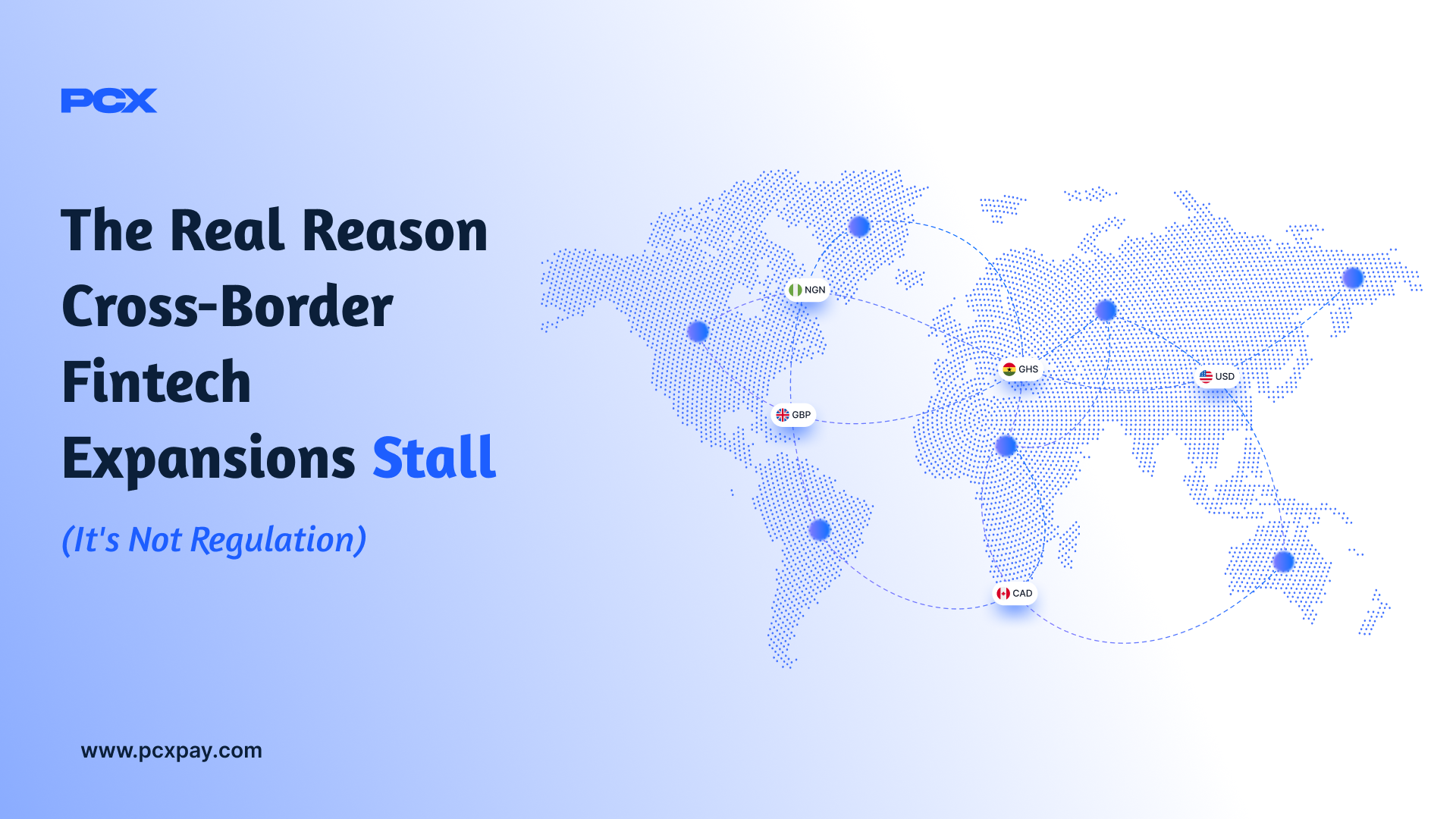
The Expansion Assumption That Breaks at Scale

Many platforms assume expansion is simply a matter of adding another payment partner or local rail.

At first, this feels achievable. The product already works in one region. Transactions flow successfully. User demand exists elsewhere. Expansion appears to be a replication problem.

Then reality intervenes.

Settlement timelines behave differently. Banking relationships vary by corridor. FX liquidity changes across regions. Local payout systems introduce new failure points. Reporting structures stop aligning cleanly across markets.

The architecture that worked in one geography suddenly becomes difficult to coordinate globally.

This is where growth begins slowing down.

Not because regulation exists.

But because infrastructure was never designed for operational variation at scale.

Cross-Border Systems Fail Quietly First

The first signs are usually subtle.

Support tickets increase because transaction states become inconsistent between providers. Finance teams struggle to reconcile balances across regions. Engineering teams spend more time managing partner exceptions than improving product reliability.

Over time, operational complexity grows faster than revenue.

Each new market introduces another dashboard, another settlement process, another reporting structure, and another dependency chain.

The platform expands geographically while becoming less operationally coherent internally.

Eventually, the business reaches a point where launching another corridor feels risky rather than exciting.

This is the real expansion ceiling.

Why Fragmentation Becomes Expensive

Cross-border payments are not a single system.

They are coordinated interactions between banking rails, FX providers, compliance engines, local payout networks, treasury systems, and settlement partners.

When those layers operate independently, every expansion multiplies complexity.

A payout marked successful in one system may still be pending settlement elsewhere. FX timing differences affect treasury visibility. Regulatory reporting structures vary across jurisdictions.

None of this appears during early growth stages.

All of it appears during the scale.

This is why many fintechs discover that international growth creates operational strain long before it creates operational leverage.

Infrastructure Determines Expansion Speed

The platforms that scale internationally most effectively usually share one characteristic.

They treat infrastructure coordination as a strategic priority early.

Instead of stitching together fragmented regional systems, they design around centralised transaction visibility, coordinated routing logic, scalable reconciliation, and infrastructure-level observability.

At PCXPay, cross-border infrastructure is designed around this principle. Routing, settlement, compliance, and FX management operate as interconnected layers rather than isolated integrations.

The objective is not simply to support more markets.

It is to ensure operational consistency as those markets grow.

Expansion Requires More Than Market Access

Most fintechs think expansion depends on entering new regions.

In practice, sustainable expansion depends on maintaining control as complexity increases.

Because entering a market is easy compared to operating reliably within it.

The companies that scale successfully are not necessarily the ones with the most aggressive rollout strategy. They are the ones whose infrastructure remains stable while everything around it becomes more complex.

That is what turns expansion from a growth risk into a growth engine.

If your cross-border operations feel increasingly fragmented as you scale, the bottleneck may not be regulation. It may be infrastructure coordination.

Explore how PCXPay helps platforms simplify cross-border operations through infrastructure designed for scale, visibility, and operational resilience.
#fintechexpansion#crossborderpayments#softwarearchitecture#systemdesign#globalscale

Other Stories

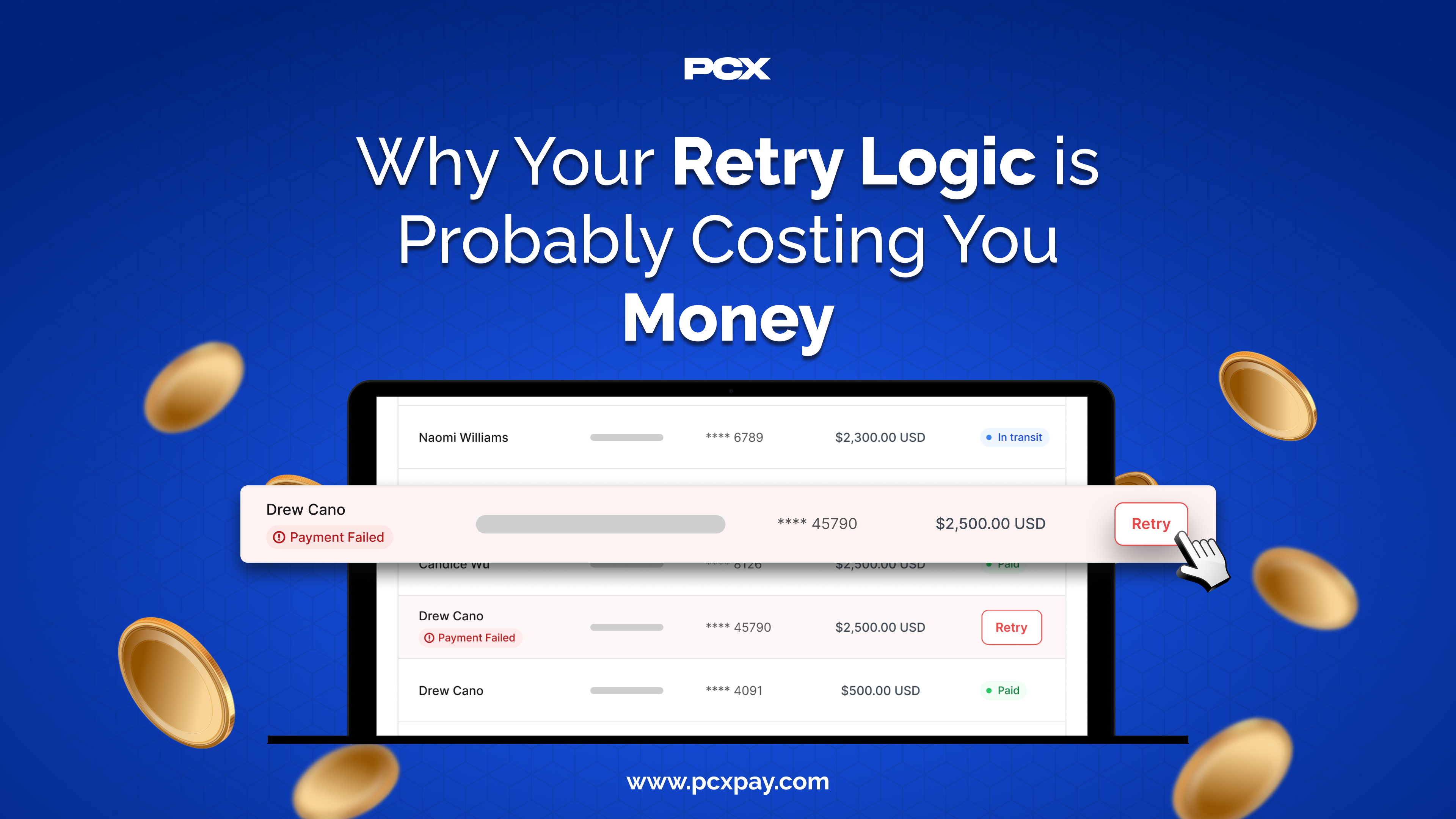
Why Your Retry Logic is Probably Costing You Money

Why Your Retry Logic is Probably Costing You Money

Most payment systems treat retries as a safety mechanism. A transaction fails, the system tries again, and success rates improve. At least in theory. In practice, poorly designed retry logic often creates hidden operational costs that become more expensive as transaction volume grows. Duplicate processing, unnecessary routing fees, delayed settlements, partner strain, and inflated infrastructure usage are all common side effects of retry systems designed around brute force repetition rather than intelligent orchestration. Retries solve failure. But unmanaged retries can also amplify it.

Friday, 21 August 2026

Read More
Multi-Currency Wallets: Simple Concept, Complex Execution

Multi-Currency Wallets: Simple Concept, Complex Execution

Multi-currency wallets appear deceptively simple from the outside. Hold multiple balances. Convert between currencies. Send and receive funds across regions. For users, the experience feels straightforward. Behind the infrastructure layer, however, multi-currency systems are one of the most operationally complex products payment platforms can build. Because supporting multiple currencies is not simply about displaying different balances. It requires coordinating settlement behaviour, liquidity management, FX exposure, compliance obligations, and transaction visibility across entirely different financial systems simultaneously. The complexity begins long before the first currency conversion occurs.

Friday, 14 August 2026

Read More
The "1,000 Transactions" Trap: Why Early Payment Success Doesn't Scale

The "1,000 Transactions" Trap: Why Early Payment Success Doesn't Scale

The first thousand transactions usually create a dangerous kind of confidence. Payments appear stable. Reconciliation feels manageable. Support tickets stay low. Dashboards look healthy. From the surface, the infrastructure seems ready for growth. Then volume increases. Suddenly, retries begin stacking. Settlement mismatches become harder to trace. Transaction delays appear across specific corridors. Finance teams start escalating inconsistencies engineering teams cannot immediately reproduce. What worked perfectly at low volume begins failing under operational pressure. This is one of the most common traps in payment infrastructure. Early payment success is not proof of scalability. It is often proof that the system has not yet been stressed.

Wednesday, 5 August 2026

Read More
Why "Free" Payment APIs Cost More Than You Think

Why "Free" Payment APIs Cost More Than You Think

"Free" is one of the most effective words in fintech marketing. Free API access. Free integrations. Zero setup costs. For early-stage companies moving quickly, these offers feel compelling. A few lines of code, a sandbox environment, and payments appear operational within days. From the outside, it looks like infrastructure has become commoditised. But payment infrastructure is rarely free. The cost simply moves somewhere less visible.

Wednesday, 29 July 2026

Read More
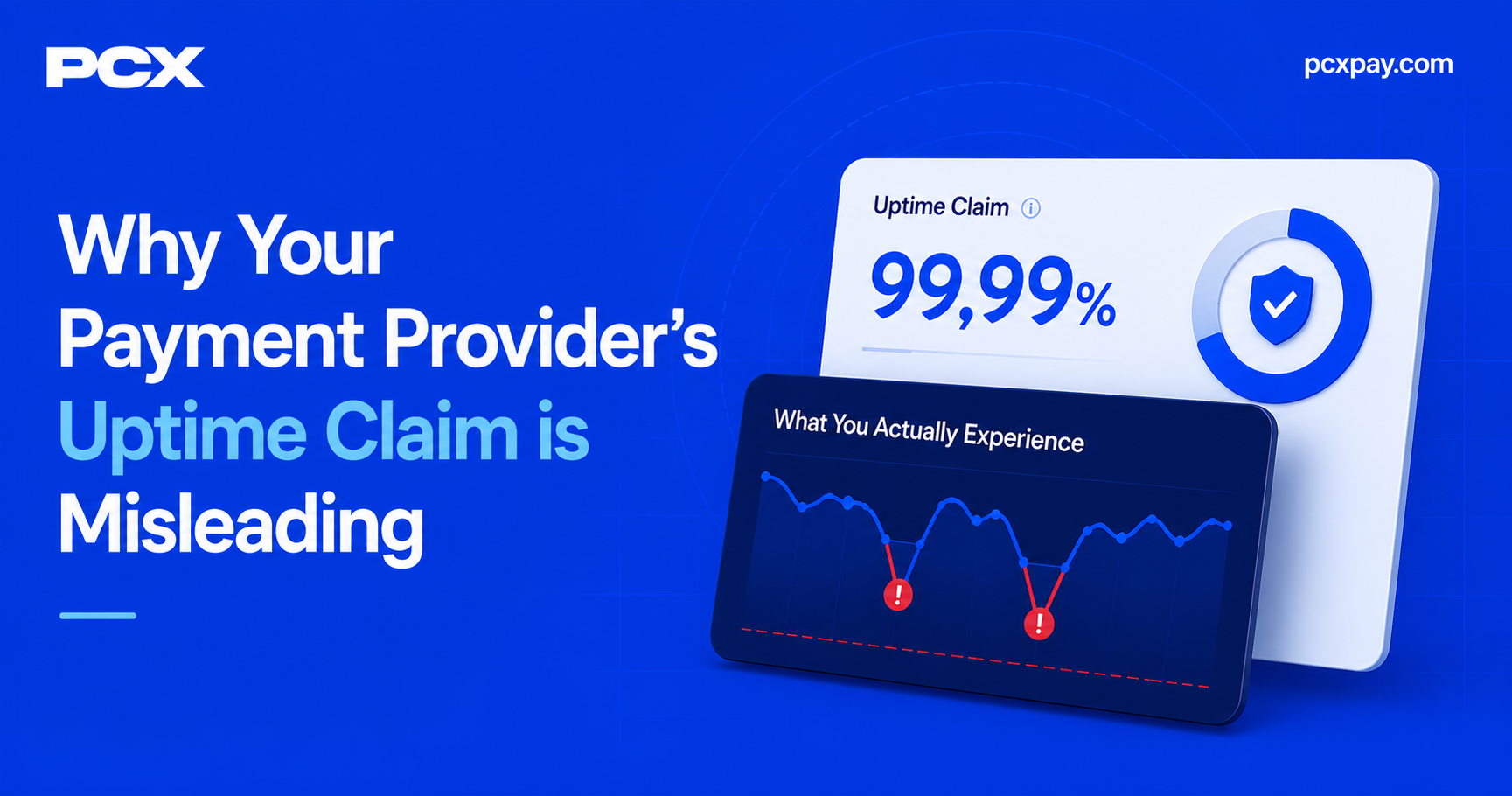
Why Your Payment Provider's Uptime Claim Is Misleading

Why Your Payment Provider's Uptime Claim Is Misleading

"99.9% uptime" has become one of the most overused metrics in payment infrastructure. It appears on landing pages, sales decks, and vendor comparison sheets across the industry. For many companies evaluating payment providers, high uptime percentages create the impression of reliability and operational stability. But uptime alone says very little about whether payments actually succeed. A payment API can remain technically available while transactions fail downstream across settlement rails, banking partners, compliance systems, or liquidity providers. Requests still receive responses. Dashboards remain accessible. Status pages stay green. Meanwhile, payouts stall, settlement queues delay, and cross-border transactions fail silently several layers deeper in the infrastructure stack. From a monitoring perspective, the provider is "online". From a business perspective, payments are breaking.

Wednesday, 22 July 2026

Read More
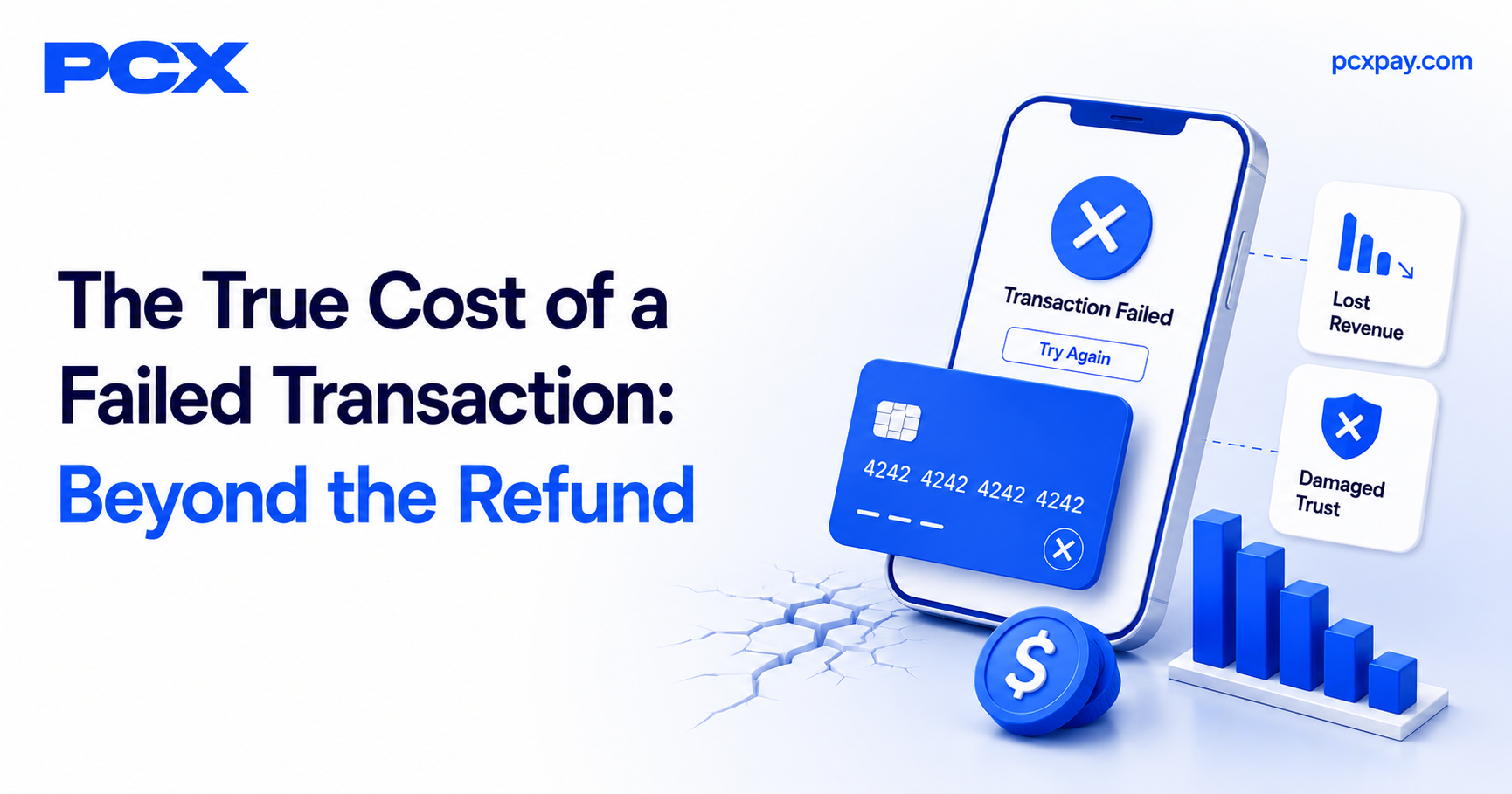
The True Cost of a Failed Transaction: Beyond the Refund

The True Cost of a Failed Transaction: Beyond the Refund

Most payment failures look manageable on the surface. A transaction declines. A refund is processed. Support closes the ticket. From the outside, the issue appears resolved within minutes. But for platforms operating at scale, the refund is often the cheapest part of the failure. What actually becomes expensive is everything surrounding it: the operational investigation, the reconciliation effort, the customer uncertainty, and the long-term trust erosion that rarely appears in financial reporting. In modern payment infrastructure, failed transactions are not isolated incidents. They are operational events that ripple across finance, support, engineering, and customer experience simultaneously.

Thursday, 16 July 2026

Read More

Make Money Borderless

Stop building payment infrastructure. Start shipping features that matter. Join the platforms already moving money globally with PCX.